After the storm: what to do when the power comes back dirty
The lights returning is not the same event as the house being well. Surges, wet boards and a fridge that never sounds right again are the hour a lot of emergency pages skip.
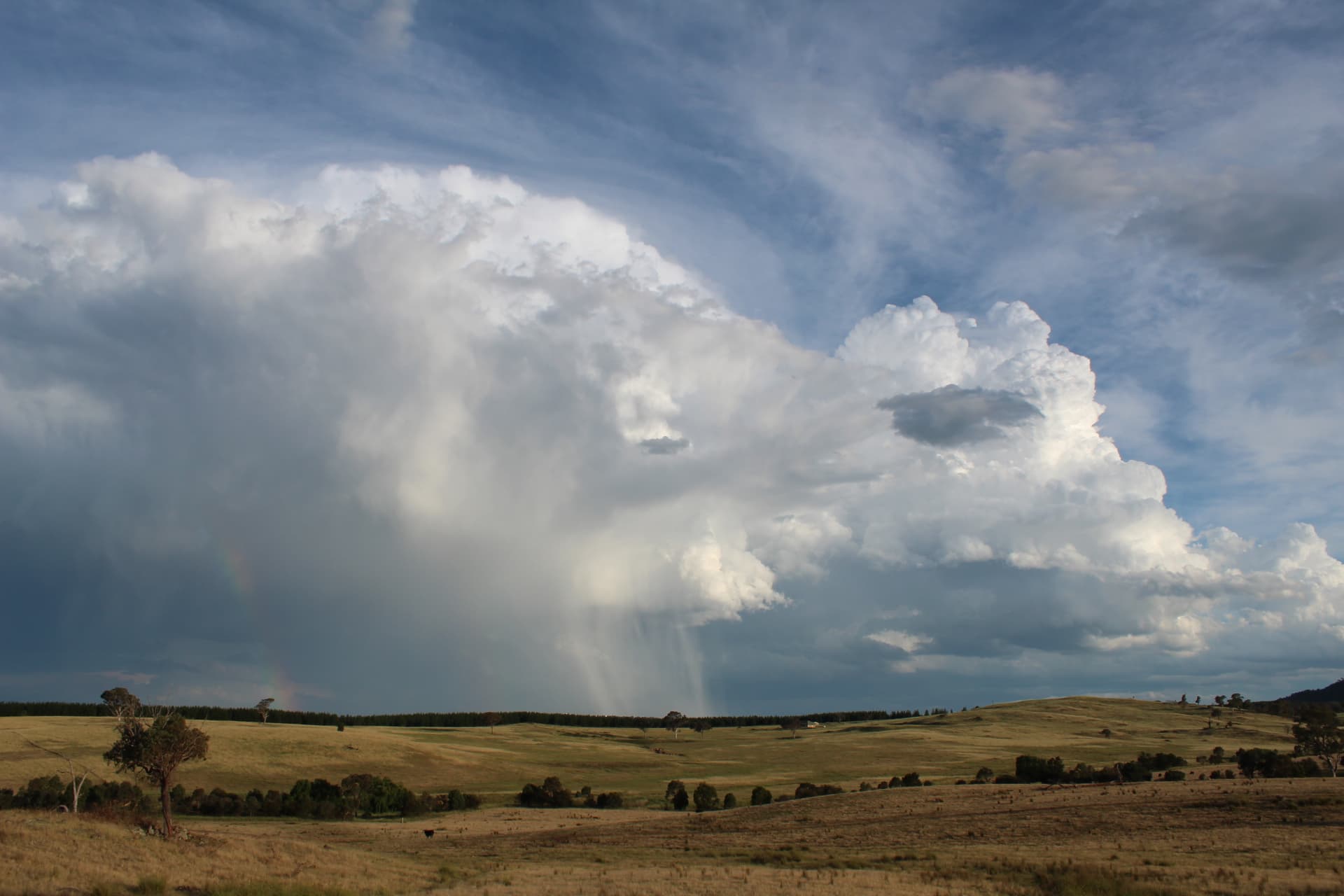
Photograph: Alex Tomlinson. Licence: CC BY-SA 4.0. Source on Wikimedia Commons. Also listed on our image credits page.
Adelaide’s storms are short and theatrical. A cell comes off the gulf or collapses over the Hills, the sky goes a colour that makes people photograph the verandah, and for twenty minutes the city sounds like a roofing merchant falling down a stair. Then the power either holds or it does not. The part a lot of “emergency electrician” pages skip is the hour after restoration — the surge, the wet meter box, the fridge that never quite sounds right again.
This is a note for that hour. It is slightly more urgent than our licensing essays because the house is wet and the supply is unstable. It is still unhurried, because rushing is how people turn a restoration into a fire.
The hour after the lights return
Restoration is a network event. SA Power Networks has been putting feeders back together, sometimes in pieces, sometimes with the sort of switching that a house experiences as a flicker, a brown-out, or a hard slam of voltage. What arrives at your board may not be the smooth supply you had at lunch. It may come, go, and come again. It may come with a neighbour’s generator still running in a shed that was never meant to talk to the street.
Do not treat the first glow of a hallway lamp as a certificate of health. Walk the house with your senses before you walk it with your appliances. Look at the meter box from the outside if you can do so without standing in water or under a limb. Smell the laundry where the board lives. Listen. A house that is about to tell you something usually does it quietly at first: a buzz, a warmth, a damp that should not be behind a cover.
If there is smoke or flame, you are not in an essay. Leave and call 000. If a line is down, or the service to the house is hanging, or the pole in the street is wounded, that is SA Power Networks and, if people are in danger, 000 — not a moment to tidy the garden.
What “dirty power” means in a house
You will not see a label. Dirty restoration is a cluster of behaviours: voltage that sits too low and makes motors groan, voltage that sits too high and cooks electronics, spikes when a feeder is re-energised, brief outages that repeat, and, in the nastier cases, problems on the neutral that make lights brighten and dim as loads change. Older Adelaide houses notice this sooner than a new townhouse with residual current devices and a tidy map.
The fridge is a good witness. A compressor that starts, fails, and starts again is a machine being asked to work on an unsteady supply. A television that ticks and will not come back is sometimes only a sacrificed power supply. A downlight that is suddenly much brighter than its neighbours is not a personality change.
This journal’s warning signs of an electrical fault essay is the slower catalogue — discoloured plates, buzzing dimmers, the smell of hot dust. After a storm those signs arrive in a compressed evening. Take them seriously the first time.
Dirty power is also water. A meter box that has taken rain, a verandah socket still dripping, a roof void with a new dark patch — these are environments the installation was not being asked to inhabit at four o’clock. Leave wet covers closed. Do not dry a board with a towel. Do not open a switchboard to inspect it. Isolation from the household main switch is a different act from opening live internals. If you do not already live with that distinction, leave the cover alone.
What to turn on last
Bring the house back in a sequence that assumes the supply may fail again. Lighting in one room is enough to see. Phones can charge. Leave the oven, dishwasher, dryer and the second air-conditioner off. If you have a portable generator running, read the neighbouring essay on changeover switches before you even think about how the house and the generator will meet. They must not meet through a powerpoint. They must not back-feed the street.
The fridge can wait a few minutes while you confirm that the supply is holding and that the laundry does not smell like a fault. When you restore it, stay long enough to hear the first start. If a motor is struggling, switch that circuit off again. Computers and televisions are better left unplugged until the feeder has decided to stay. Surge protection is not a reason to plug a houseful of electronics into a restoration you do not trust.
The lights coming back on is not the same event as the house being well. What you turn on last is a kindness to the board.
Wet boxes, smells and the things you leave off
A wet meter box is a network conversation and a safety conversation at once. From the footpath, without touching it, you can often see whether water is sitting in the enclosure. If the equipment looks wounded, if it is arcing, keep people away and call SA Power Networks. If someone is hurt, call 000 first.
A wet switchboard inside the house is your side. Leave it. A licensed electrician can isolate and assess it when the water is no longer arriving. You cannot usefully improve a wet board with a hairdryer.
A smell of hot plastic or that particular electrical sweetness people struggle to name — leave the circuit off. If the smell is strong or you can see discolouration, leave the house if you need to. Storm nights produce a lot of stories about smells that cleared. They also produce the fires that started in the roof void at two in the morning. Outdoor points can stay off until daylight.
When it is a network problem
SA Power Networks runs the poles and wires. Life-threatening faults are still 000, then the network emergency line. The household side — the board, the sockets, the smell in the laundry — is a licensed electrician once it is safe to have one. The storms and outages hub is where we keep that division of labour.
A whole street dark is a network event even if your board looks tidy. A single house dark when the neighbours are lit may still be a service fuse, a meter, or a connection at the point of supply. It may also be your main switch or a flooded enclosure. You will not reliably tell those apart from the kitchen. Report what you can see to the network operator without touching it. Do not open the meter. Do not replace a service fuse. Do not climb.
If trees are on lines, stay away and do not become the person who thought a timber limb was insulating.
Appliances that never sound right again
Some damage is delayed. A fridge that ran on a sagging supply may fail on Thursday. An inverter may sit in a fault state and wait for you to notice that the app is quiet. Unplug the doubtful thing. Do not keep resetting it as a hobby.
Make notes: when the power went, when it returned, how many times it flickered, what smelled, what you left off. If you later claim on insurance, or if a licensed electrician is hunting a neutral that only misbehaves when the street is stressed, those notes are more useful than a vibe.
The safety hub is the wider domestic picture. After a storm you need one fact from it: a trip is information. Resetting without looking is how people skip the information.
The next morning
Daylight makes liars of some night fears and confirms the rest. Walk the eaves. Look at the point where the service arrives. Look at the meter box door. Look at the yard for a line that is lower than it was. If the house feels ordinary and the fridge is itself, you can return to the unhurried life of this journal.
If anything is still doubtful, leave it off and get a licensed electrician — one you can search — to see the board. Ask for a Certificate of Compliance if they do work. Do not ask them to “just flick things on and see”. The restoration already did that experiment.
Storms will come again. The civic habit is the same each time. 000 for fire and ambulance. SA Power Networks for the street and the service. A licensed person for the house. Nothing live, nothing heroic, and nothing turned on just because the lights came back and you were tired of the dark.
Questions readers send the desk
- Should I turn everything back on the moment the lights return after a storm?
- No. Look first for water, smell and damage. Bring essential lighting back carefully and leave wet or doubtful circuits off. A rush of appliances at once is how a dirty restoration becomes a second fault.
- Who do I call if the meter box is wet or the street is still a mess?
- SA Power Networks for network equipment, poles, service mains and a meter that belongs to their world. 000 if there is fire, a person injured, or a life-threatening situation. A licensed electrician for the house side once it is safe to stand there.
- Why does an appliance sound different after an outage?
- Restorations can arrive with voltage that sags, swells or spikes. Motors and electronics notice. Unplug the doubtful appliance, do not keep restarting it, and treat a burning smell as a reason to stop using that circuit.