Blackouts, generators and changeover switches
A portable generator is not a plug with ambitions. Without a changeover switch it can back-feed the street. This is the unhurried version of not killing a linesperson.
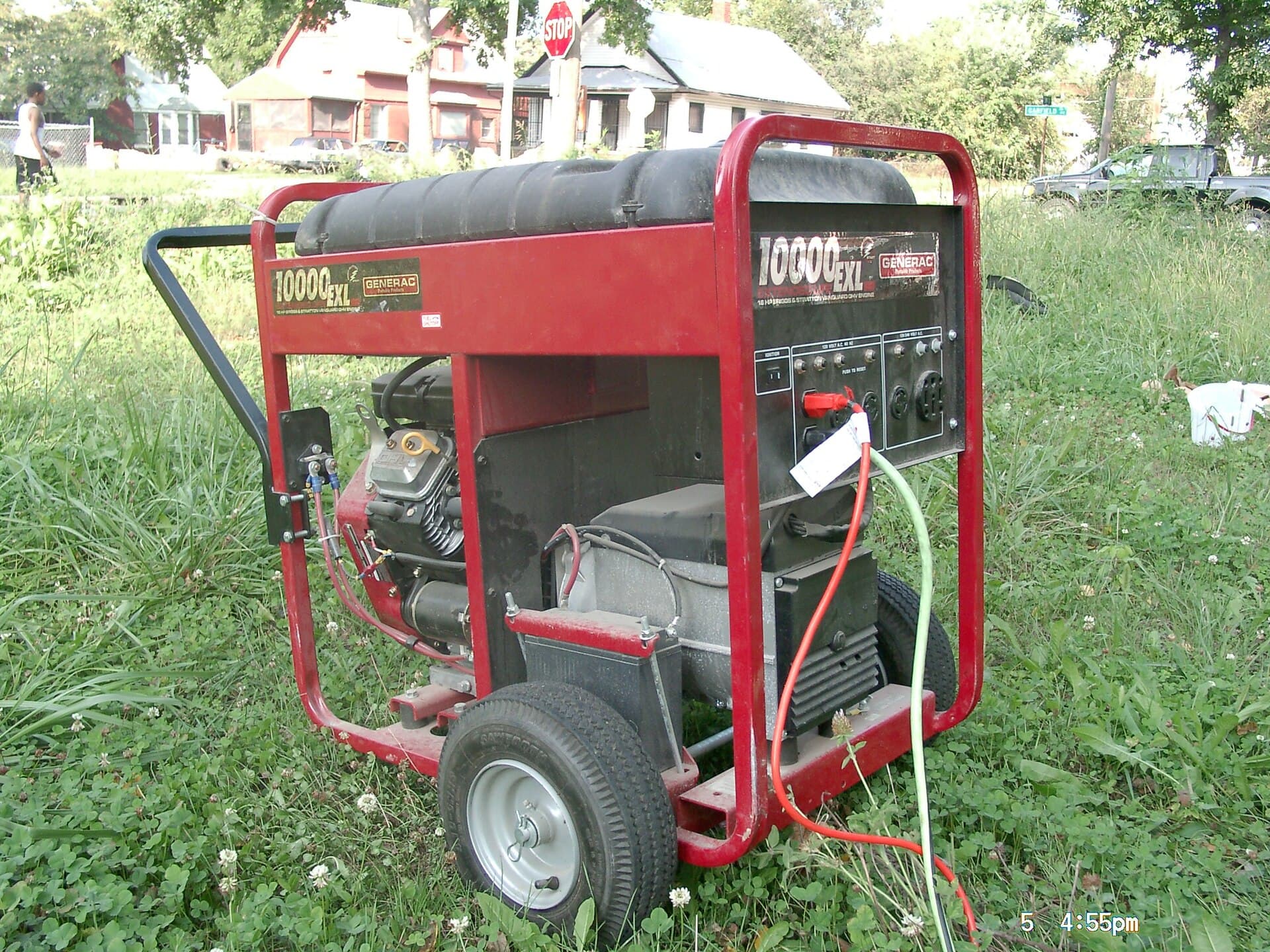
Photograph: Wikimedia Commons contributor. Licence: CC BY-SA 3.0. Source on Wikimedia Commons. Also listed on our image credits page.
Every few summers Adelaide loses a suburb for an evening, and every few winters the Hills lose a feeder because a tree and a crossarm finally agreed. The hardware shops sell generators the next morning as if a blackout were a camping trip. A portable petrol set on a concrete slab can keep a fridge cold and a lamp on. It can also, wired with optimism, put voltage on a line that a SA Power Networks crew believed was dead.
I will not describe how to back-feed a house. I will describe why a changeover switch exists, who installs it, and how to use a generator without turning the street into your circuit. If you came here for a diagram of a suicide lead, this journal is the wrong publication.
Why a generator is not a plug
A household powerpoint is an outlet. It is designed to receive energy from the installation and give it to an appliance. It is not designed to accept a generator’s output and send it backwards through the board, through the meter, and out toward the pole. When people do that anyway — with an old caravan lead, a homemade adaptor, a “my uncle in the Riverland does it” story — they are not being resourceful. They are energising equipment that someone else may be touching.
Linespeople work on the assumption that an isolated feeder is isolated. A generator on the wrong side of that assumption is a lethal surprise. Neighbours are a surprise too: a child, a dog, a person clearing a limb they should not be clearing. This essay is about the machine in your driveway.
Connecting generation to an installation is prescribed electrical work. It belongs to a licensed electrician, it should be searchable at Consumer and Business Services, and it should finish with a Certificate of Compliance. A hardware receipt is not that paper.
Back-feeding, and why we will not describe it
Back-feeding means your generator is supplying the installation in a way that can also supply the network. I am going to stop at that sentence. We will not list the leads, the pins, the “just isolate at the main switch” folklore, or the shed tricks that circulate after a heatwave.
If someone offers to show you, decline. If a video offers to show you, close it. If a relative wired a farm that way in 1988, that relative was lucky, or the people on the line that day were lucky, and luck is not a standard.
The safe domestic patterns are only two. The first is a generator that never joins the house wiring: appliances plug into the generator’s own outlets, the generator sits outdoors, the exhaust points away from windows, and the house remains a separate thing. The second is a generator that joins the house only through a changeover arrangement installed as part of the fixed installation. There is no clever third way that a journal will endorse.
What a changeover switch actually does
A changeover switch is a selector. In the arrangements used on ordinary houses it lets you take a defined set of circuits from the grid or from the generator, not from both at once. When it is installed correctly, the generator cannot push energy toward SA Power Networks. When the grid returns, you can move back. The details — which circuits, which ratings, where the generator inlet lives, how earthing is arranged, how the inlet is interlocked — belong to the licensed person and to the current rules, not to a paragraph I write from a desk.
I will not invent a wiring method here. I will say what a homeowner should see. An inlet that is clearly for the generator, not a household powerpoint being asked to act. A switch that has a position for grid and a position for generator. A label a stranger could read during a blackout. A location that does not require you to stand in weather with a live lead across a puddle. Testing, when the job is finished, not a hopeful first start during the next outage.
Some houses now have batteries and hybrid inverters that already manage islanding under their own connection rules. That is a different conversation, and it is still not a reason to add a petrol generator with a homemade lead. If you already have an inverter, tell the electrician before anyone prices a changeover. The installation is one system. Two sources of energy without a design is how boards become folklore.
A generator must not back-feed the street. The changeover switch exists so that the house can be lit without turning the pole into your circuit.
Sizing, fuel and the shed
People buy generators by the biggest number on the carton and then wonder why the welder and the air-conditioner and the kettle cannot sing together. A licensed electrician can help you choose which circuits are worth having in a blackout. A fridge, some lights, a medical device, a communications outlet — that is a household. A ducted system and a spa is a different installation.
Fuel is a household hazard of its own. Petrol in a hot shed, a running set in a closed garage, a lead across wet concrete — these injure people without any help from voltage. Outdoors, away from windows, on a stable surface, is the beginning of a sensible pattern.
Noise matters in Unley in a way it does not on a Hills acre. A four-hour outage does not entitle you to a machine that makes the street unliveable until midnight. The civic version is the smallest set that does the necessary work. If the generator is the separate-appliance kind, put the fridge on a lead that is rated, dry, and short enough that you can see both ends.
Who installs it
A licensed electrician. Search them the way you would for a board upgrade. Ask whether they have installed changeover equipment on comparable houses. Ask how the inlet will be arranged. Ask what will be on the generator position and what will stay off — hot water, ovens and air-conditioners are often the loads that make a small set miserable.
Ask for the Certificate of Compliance. Ask how you will operate the switch in the dark, once, in daylight, before you need it. A changeover you do not understand at 9 p.m. in a storm is a sculpture.
This is not owner-builder electrical work. It is not a Saturday with a friendly sparky watching from the car. If the quote sounds like a lead and a promise, it is not a quote for a changeover switch.
During the outage
If you have only the separate-appliance pattern, keep the generator away from the house wiring and away from the meter. Do not “help” it with the main switch in some configuration a forum described. Do not run it in the garage with the door down because of rain. Do not refuel a hot machine the way a film would.
If you have a changeover, use it as you were shown. Start the generator first or switch first according to the instructions you were actually given for your equipment — I will not invent a sequence that might contradict your inlet. Stay with the machine for the first minutes. If anything smells, stop.
If the outage is also a storm, the house may have a wet board or a wounded service. A generator will not make those safe. The after the storm essay is about dirty restoration. The emergency electrician essay is about leaving. A generator is not a reason to stay in a house that smells like a fault.
After the power returns
Move back to the grid through the changeover, then shut the generator down. Do not leave a set running “just in case” while the feeder is up; you are wasting fuel and you are one distracted moment from a wrong action. Look at the house the way the dirty-power essay asks: smells, wet covers, a fridge that is itself.
If the restoration is flickering, wait before you transfer. Dirty grid plus a tired operator is how changeover equipment gets asked the wrong question.
The storms hub is the rest of this weather. I will repeat the only instruction that matters at the end as at the start. Never back-feed. Never work live. Never invent a lead that turns a powerpoint into an inlet. Buy a machine that matches a designed arrangement, or plug appliances into the generator and leave the house wiring out of it. The linesperson you will never meet is still on the pole.
Questions readers send the desk
- Can I plug a generator into a household powerpoint to run the fridge in a blackout?
- No. That arrangement can energise the house wiring and the street. Use the generator only for separate appliances via its own outlets, or have a licensed electrician install a changeover switch.
- What does a changeover switch actually do?
- It selects either the grid or the generator, not both. When it is installed correctly, the house circuits you have chosen cannot feed back into SA Power Networks’ equipment.
- Do I need a Certificate of Compliance for generator changeover work?
- Yes. It is prescribed electrical work. Check the electrician’s licence with Consumer and Business Services and keep the certificate with the household file.