Off-grid fantasies versus grid-tied reality in the Adelaide Hills
Stirling, Aldgate and Blackwood already live with trees, winter sun and a feeder that can vanish for an evening. That is a reason to design backup. It is not, by itself, a reason to leave SA Power Networks.
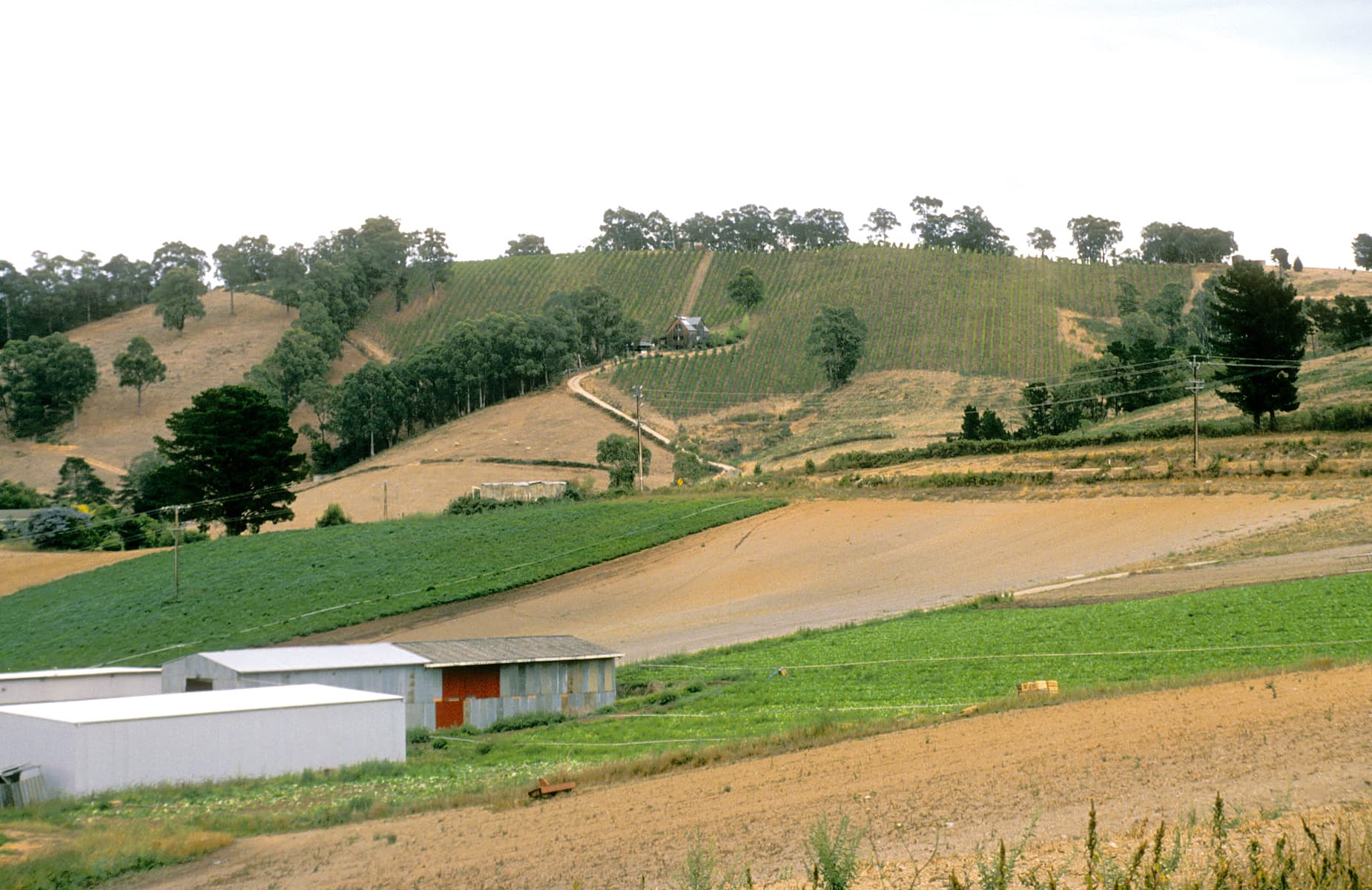
Photograph: John Coppi, CSIRO. Licence: CC BY 3.0. Source on Wikimedia Commons. Also listed on our image credits page.
The Adelaide Hills invite a particular daydream. You stand on a winter verandah in Stirling, look at the stringybarks, remember the last time the feeder died at dinner, and think: perhaps the answer is to stop depending on the street. Aldgate and Blackwood have the same thought after a Friday-night cell. Sales literature meets that thought with a shed full of lithium and a generator that will, in the drawing, never be heard. Off-grid is a real technical arrangement. It is also a maintenance business that happens to include a house. Grid-tied, even in bushfire country, is still how most of these towns actually live.
The journal’s energy hub is not a shopfront for either romance. We write about inverters, export and isolation because those are the objects that remain after the mood has passed. If you have already been quoted a generator and a wall of batteries, read this before you treat the quote as a moral decision.
The fantasy is tidy
Off-grid, in the brochure, is a closed loop: panels, a hybrid inverter, a battery sized to the evening, a generator for the week the sky sits on the ranges, and no SA Power Networks letter about a connection. The drawing is clean. The Hills are not. Winter sun is a rumour on the south side of a ridge. A Stirling roof that looks decisive in January can spend July looking at cloud and wet leaves. People who moved from Mawson Lakes, where the estate can resemble a single generating plant, sometimes underestimate how much array they will need here for the same kettle.
Hills houses are not small electrical objects. They have borehole pumps, large heating, workshops, guests in January, and, increasingly, a charger and a heat pump. An off-grid design that assumes a polite inner-suburban load will meet the first long weekend and then start the generator. Starting the generator is the system working. It is also the part the brochure crops.
Off-grid is a maintenance business that happens to include a house. Grid-tied is a house that happens to include an inverter.
If you want the closed loop, you can have it. You will own every failure. That independence is the product. It is not a side effect.
What the Hills actually do to a solar day
A Blackwood block with established gums is a solar design problem before it is a product problem. Trimming is a neighbour and council conversation as well as an irradiance one, and bushfire season complicates it: you want less fuel, and you also want the trees that keep the western wall from cooking. Roof space is often worse than on the plains — steeper pitches, more chimneys, more later additions. Ground-mounts appear because the roof has lost the argument. They need fencing, mowing, and cable runs treated as real circuits, not extension leads in long grass.
Temperature swings are wider than a Pooraka garage. A metal shed on a ridge will cook a pack in February and then sit near the chemistry’s sulk point on a July night. The home battery brief covers cycling, reserve and siting without inventing a price. In the Hills, add: the shed is a climate, the backup reserve is not optional if the feeder is unreliable, and a pack kept full “just in case” is ageing while it waits. Fog is ordinary. Design for the dull fortnight, not for the clear Saturday when the salesperson visited.
Grid-tied is not a moral failing
Most houses in Stirling, Aldgate and Blackwood are already on the network. The outages are real and usually finite. A grid-tied solar system with an export arrangement from SA Power Networks, and a battery commissioned to island a defined set of circuits, gives you the resilience people often mean when they say “off-grid”, without sizing generation for the worst July on record.
That design has rules. The inverter must be approved. The connection must be applied for. Export may be limited or flexible; the Hills feeder is not exempt from physics. Isolation must keep a dead street dead when your battery is live. A licensed electrician designs that island. A Certificate of Compliance records it. A changeover that can back-feed the network is a hazard in a storm, not independence. Read solar, inverters and export for the plains version; here the backup list is more serious. Write the circuits: lighting, communications, a fridge, a pump, a medical device. Whole-house backup is possible and larger. It should not be sold as the default to someone who meant the fridge and the modem.
SA Power Networks remains the operator of the poles you can still see. Staying connected means you still have that institution. Leaving means you have a generator manual. Three-phase turns up on semi-rural blocks more often than in a compact Glenelg terrace, usually because a pump or workshop asked for it. It changes inverter choice. It does not, by itself, decide the off-grid question. See three-phase power in suburban Adelaide if the existing service is the part of the quote nobody has explained.
Generators, lithium and winter
A serious Hills backup conversation includes a generator. Batteries cover the first evening. Multi-day outages — fire weather, a tree that takes more than a crew’s afternoon — are generator weather. The machine needs a changeover that cannot energise the street, an exhaust story that will not kill anyone in a closed garage, fuel stored like fuel, and a test schedule that does not begin during the outage. The storms hub exists because this is the hour people skip in peacetime.
Lithium delays the generator and makes the delay comfortable. It does not replace it. Sizing the pack as if it were a generator is how households discover winter recharge and the sound of a machine they swore they would not need. Hybrid inverters that already speak battery are reasonable. They are not a free path to off-grid. Off-grid commissioning and the absence of a network reference are a different setup from a grid-tied hybrid that islands on command. Ask which of the two is being sold. The South Australian Home Battery Scheme is not a reason to take either path. It ran. It closed. Later programs should be verified on a government page and ignored if the design only works because of them. This desk will not invent a rebate figure to make a shed look cheaper.
Paperwork, bushfire and the shopping list
Bushfire-prone country adds constraints a Mawson Lakes garage does not. Siting a battery or generator against a timber wall under leaf litter is not a detail. Clearances, non-combustible enclosures, and the ability to isolate generation when the Country Fire Service is on the driveway are part of owning plant here. If you remain grid-tied, inverters, export settings and isolation still belong on paper. If you leave, you do not leave AS/NZS 3000, licensing, or the Certificate of Compliance. Owner-builders in the Hills are not a special electrical class. Insurers are not sentimental about missing certificates after a fire.
Marino and Glenelg have salt, a denser feeder, and almost no serious off-grid conversation. Pooraka has heat and crowded rooftops, and likewise no good reason to leave the street. The Hills conversation exists because the trees make the street feel optional. Feeling is not an engineering report. An outage log, a load log and a roof survey are.
Start with the board and the load, not the shed. List the circuits that must persist and the hours you actually lost last year. Walk the roof in July. Ask what SA Power Networks will approve if you stay, and what isolation looks like if you island. Then ask whether you are buying backup or independence. Backup is a grid-tied inverter, a battery with a reserve, a tested changeover, and possibly a generator. Independence is all of that plus enough array and fuel to stop using the pole. The second is larger. It is allowed. It should not be sold under the name of the first. Believe the winter week, the switchboard, and the paper that says the island cannot feed the street.
Questions readers send the desk
- Is living in the Adelaide Hills a reason to go off-grid?
- Not by itself. Most Hills towns are on the network. Trees, winter shade and outages are reasons to talk about backup, trimming, and a board that can island a few circuits. Leaving the grid is a different project — generation, storage, a generator, and a maintenance habit that does not take holidays.
- Can I keep a grid connection and still have backup?
- Yes, and that is the usual honest design. A grid-tied inverter and battery with a tested changeover can keep essential loads alive without asking you to become a network operator. SA Power Networks still has rules about how that island is created. A licensed electrician should design it so you cannot back-feed the street.
- What paperwork still applies if I never export?
- Electrical work still produces a Certificate of Compliance. Isolation, earthing and the generator or battery changeover are prescribed work even if no energy is sold to the street. If you remain connected, connection and inverter settings still sit with the network. Off-grid does not mean off the regulator.