Solar on Adelaide roofs: inverters, export limits and what to ask
South Australia learned rooftop solar early. The useful questions now are about inverters, export, isolation and the board that has to host the work — not about whether a brochure can make the panels pay for themselves.
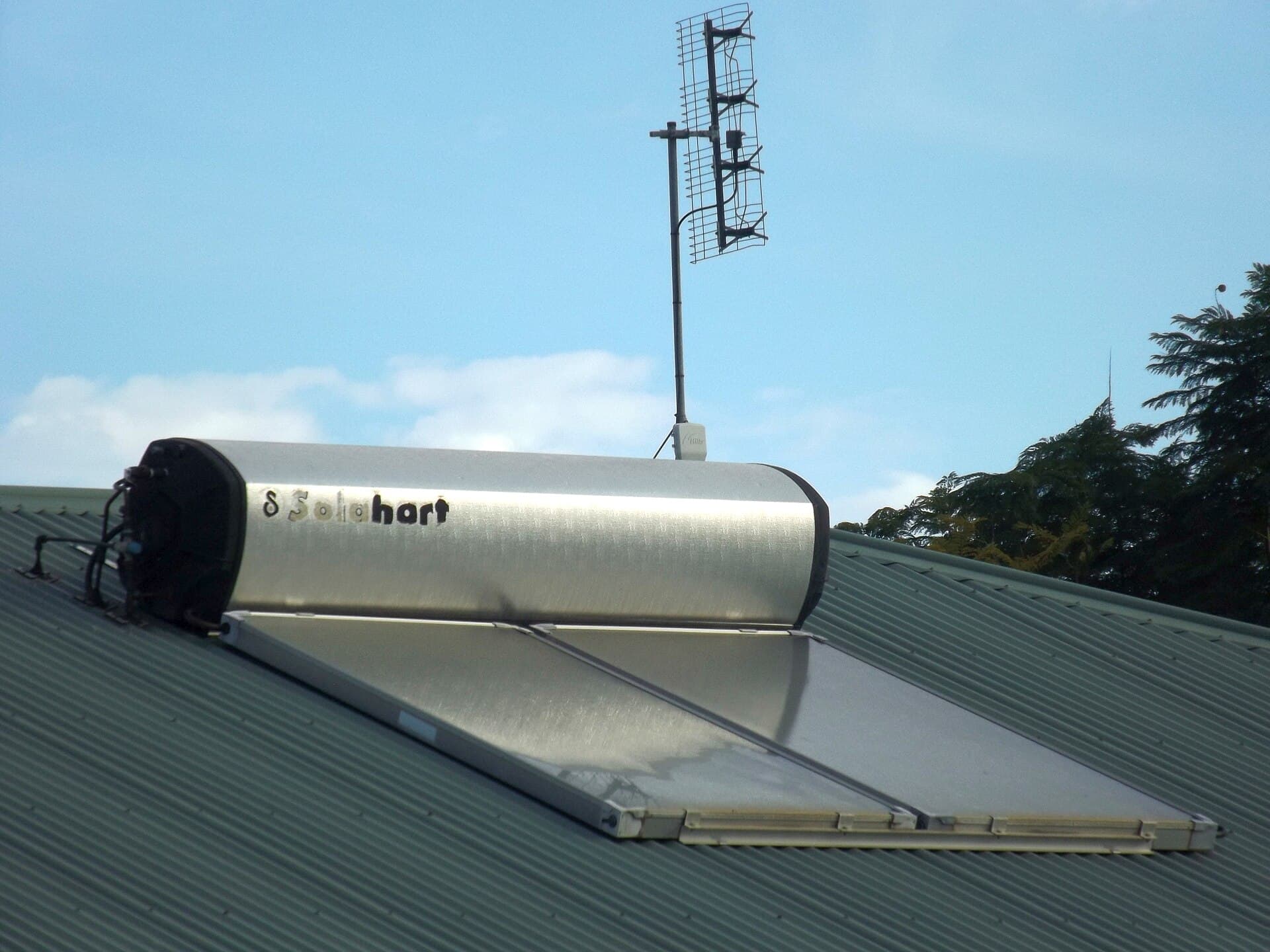
Photograph: Shiftchange. Licence: CC0. Source on Wikimedia Commons. Also listed on our image credits page.
Adelaide’s roofs collected photovoltaic glass earlier than most Australian cities, and they did it with a civic enthusiasm that now looks, from a 2026 kitchen table, slightly embarrassing. Drive through Mawson Lakes on a clear morning and the estate reads as a single generating plant interrupted by driveways. Pooraka’s older stock is less tidy — mixed tilts, mixed decades, the odd array in the shadow of a later second storey — but the density is the same idea. Marino’s western pitches see a different afternoon from a Blackwood ridge. None of this is a reason to buy panels from a magazine. It is why the useful conversation has moved off the glass and onto the inverter, the export setting, and the cupboard that has to accept both.
This journal does not sell arrays. The energy hub exists because homeowners kept asking the same three questions after the rebate years: what the inverter is doing, what SA Power Networks will allow this house to send back, and what a careful person should ask before a deposit leaves the account.
The roof is not a product brochure
Orientation still matters, even in a city that talks about kilowatts at barbecues. A Mawson Lakes house with a clean north plane is a different plant from a Glenelg bungalow whose useful roof faces the gulf and a Norfolk Island pine. Stirling and Aldgate add tree cover and a wetter winter; the same nameplate array that looks decisive on a Pooraka plan can spend June looking at cloud and wet leaves. Heat is the other local fact. Roof spaces in a February week are not laboratory conditions. Inverters derate. Cables run hotter. The datasheet that assumed a polite ambient temperature is performing a kind of fiction.
Shade is a design input, not a moral failing. A string inverter on a roof with one stubborn chimney and a later wash of afternoon shade will drag the whole string down unless the design admits microinverters or power optimisers, and those products have their own service story. Ask which architecture is being proposed, what happens when one panel fails, and who attends when the monitoring app shows a sulk. Hail, salt and leaf litter belong in the same conversation. Marino and Glenelg eat outdoor metal faster than Burnside. The Hills eat gutters. That is an argument for a mounting system that assumes South Australian weather, not a stock photograph from another state.
What the inverter is actually doing
The panels make direct current. The inverter turns that into the alternating current the house and the street understand, under Australian standards that are not optional local colour. In South Australia the inverter is also the device that obeys the network. It can throttle export. It can ride through a voltage event or drop off. It can be set, wrongly, by someone who has never seen your tariff. The inverter is the political object on the wall. The glass is agriculture.
The inverter is the part of the system that talks to the network. The panels are the part that photographs well.
Modern inverters log, have apps, and have a habit of needing a password only the original installer knew. Ask where the logs live, who holds the account, and whether the unit is on the current approved list for this network. Ask about isolation on the alternating-current side and the shutdown sequence a firefighter or a meter technician would follow. Isolation is not a sticker. It is a physical arrangement a licensed electrician can point to with the cover off.
Hybrid inverters — the ones that already speak battery — are a reasonable question in 2026 even if you are not buying storage this year. They cost space on the board and can lock you to a chemistry you have not chosen. The companion essay on home batteries after the subsidy years is the place to take that fork. Three-phase services change the arithmetic further: an inverter sitting on one phase of a workshop or cooktop service is a design choice, not a law of nature. If the quote does not mention phases, read three-phase power in suburban Adelaide before you treat inverter size as a single number.
Export, connection and SA Power Networks
A grid-tied system is a connection. SA Power Networks decides what this span of suburban copper will accept from your roof. The application is not a courtesy email. South Australia has lived with export limits and, later, with flexible-export arrangements that raise and lower what you may send depending on what the feeder can take. The precise setting on your job is an engineering answer, and it belongs on paper before hardware is ordered.
Do not invent a right to export the inverter’s full rating, and do not accept a quote that will “sort out the network later”. Later is when the panels are already on the tiles. Ask what export limit the design assumes, whether flexible export is being offered, and who lodges the paperwork if it stalls. Voltage rise is the quiet suburban problem. Long runs, busy transformers and a street of northern-suburb rooftops that all peak at once will push voltage up. The inverter sees that as a reason to curtail. Your neighbour’s new array is a feeder fact, not a personal slight. The meter is part of the same story: export and consumption need to be measured in a way the retailer can settle. Notice if the quote never mentions it.
Isolation, paper and the licensed electrician
Prescribed electrical work in South Australia belongs to a licensed electrician. Solar is prescribed work even when the salesperson spoke only about panels. Isolation, earthing, the new circuit, the labels and the testing produce a Certificate of Compliance. You should see that paper and keep it. Insurers and conveyancers are not sentimental about missing certificates. If a quote talks about “our install team” without a licence you can search, stop.
The switchboards hub is the right detour if the existing board is a fuse board, a crowded 1980s panel, or a laundry cupboard with no spare ways. Pretty inverter covers do not clear a fault on the board that feeds them. A house that still has ceramic fuses should not be discussing array size. It should be discussing the jump from a fuse board to residual current devices. Adding generation to an unprotected board makes a bad cupboard more energetic. Labelling is part of the same finish. Shutdown instructions should be readable without a torch. If you cannot stand in the driveway and explain to a stranger which handle does what, the labelling is unfinished.
What to ask before anyone orders panels
Ask for a roof plan that shows obstacles, not a rectangle with a north arrow. Ask where the inverter will live — garage heat, western sun, a sealed cupboard — and what ambient the designer assumed. Ask what isolation is being provided, and who will test it. Ask what SA Power Networks is being asked to approve, and what happens if the answer is a lower export limit than the quote assumed. Self-consumption, export and a battery that is not in this contract are different plants. A design that tries to be all three without saying so will disappoint all three.
Ask about the existing load. A heat pump, an electric cooktop and a future charger are why daytime surplus may vanish into the house rather than the street. That is often desirable. It is not automatic. If nobody has looked at the board, nobody has designed a system. They have selected products. This desk does not publish rebate dollar figures; they go stale and become folklore. If a quote leans on a current incentive, ask for the government page, the date and the eligibility test. The South Australian Home Battery Scheme belongs in that historical file. It ran. It closed. It is not a reason to buy a hybrid inverter in 2026, and it is not a reason to refuse one.
The useful Adelaide solar conversation is now an electrical one. The city already has the glass. What it still gets wrong is the inverter in a hot garage, the export setting nobody recorded, and the owner who cannot find the isolation handle when a storm drops a branch on the service. A careful installer will enjoy being asked. A cheerful one will change the subject back to the roof. Believe the cupboard.
Questions readers send the desk
- Do I need SA Power Networks approval before panels go on the roof?
- Yes. A grid-tied inverter is a connection to the network, not just a household appliance. The installer should lodge the application, wait for the response, and tell you what export limit or flexible-export setting you have been given before anyone orders hardware you cannot use as quoted.
- What paperwork should I see when the job is finished?
- A licensed electrician should isolate, test and leave a Certificate of Compliance for the electrical work. You should also have inverter documentation, isolation labelling that matches what is on the wall, and a clear note of the export arrangement. Keep the certificate with the house papers; a conveyancer will ask.
- Is a bigger inverter always better on an Adelaide roof?
- No. The useful size is the one the network will accept, the board can host, and the roof can actually feed. A large inverter on a shaded Marino roof, or on a single-phase service that has already been told to limit export, is not a bargain. Ask what the inverter will do at 2pm in February and at 8am in July, not only what it says on the datasheet.