Installing an EV charger in an Adelaide garage or carport
A dedicated charger is a new circuit, an earthing question and a conversation with the rest of the house — not a gadget that happens to live on a brick wall. Look at the board before you look at the car.
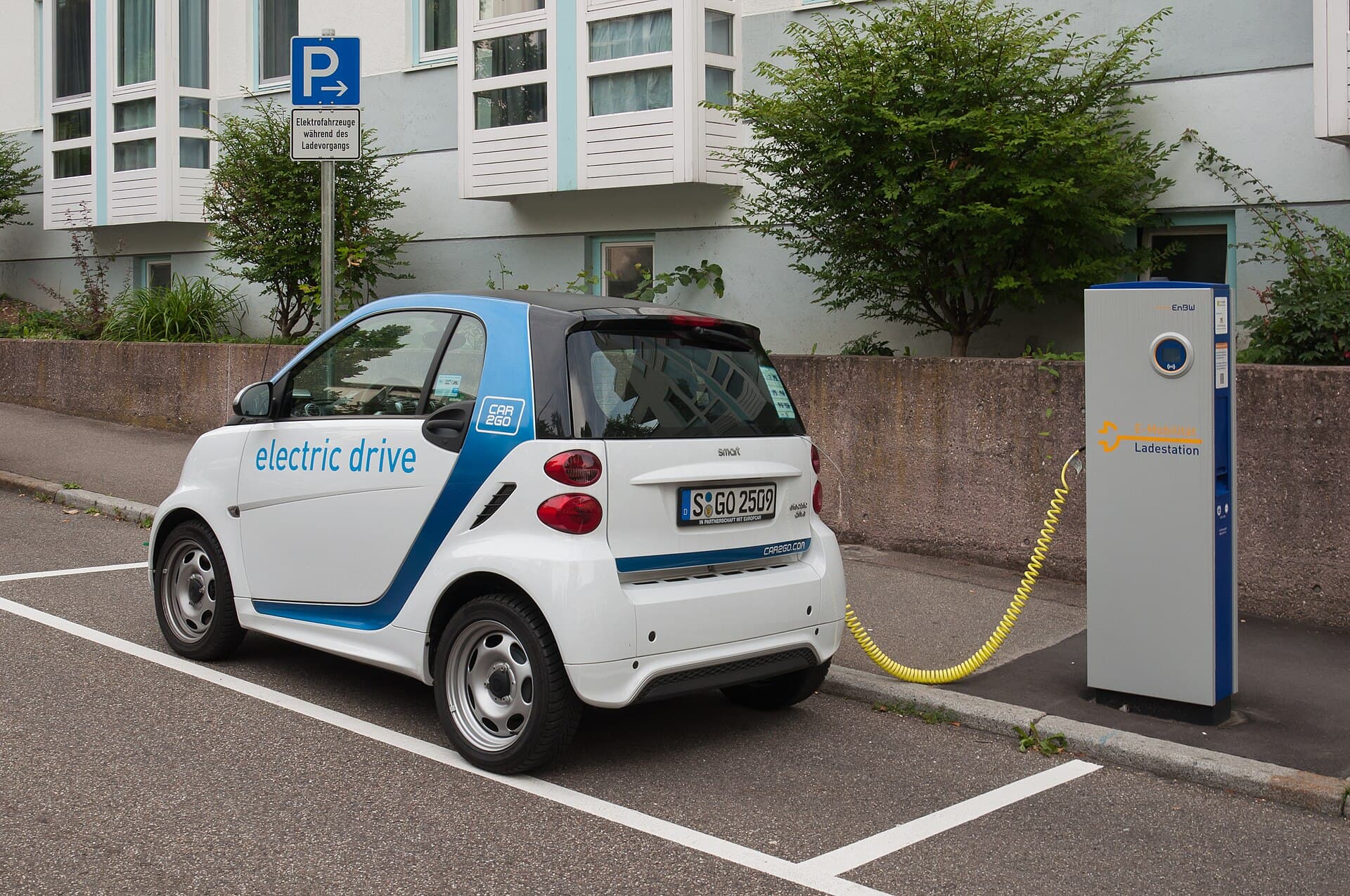
Photograph: Julian Herzog. Licence: CC BY 4.0. Source on Wikimedia Commons. Also listed on our image credits page.
The first electric car in an Adelaide street still attracts a conversation over the fence. The second one attracts a drill. By the time a household in Glenelg or Pooraka is looking at a wallbox, the question is no longer whether the car can charge. It is whether the garage, the carport, the switchboard and the service can host a new continuous load without turning the rest of the house into a negotiation. This is electrical work, not a Saturday mounting job with a cheerful app.
A portable mode-2 lead over a brick will move energy. It will also sit on an outlet designed for a fridge, in weather the outlet was not asked about, for a duration the circuit did not expect. That is how a lot of Adelaide cars spent their first year. It is not an installation. A dedicated charger is a circuit, isolation, residual-current protection chosen for the job, and a Certificate of Compliance. The energy hub treats it as a sibling of inverters and heat pumps because it arrives on the same copper.
A lead over a brick is not an installation
The portable lead is useful, and it is how people postpone the site visit. If the existing outlet is outdoors, aged, shared with a freezer, or downstream of a fuse board, postponement is optimism. A licensed electrician will tell you whether that outlet is entitled to the job. Many are not. A wall charger wants its own circuit, a run sized for a continuous load, isolation a stranger can find, and an RCD of a type that suits the charger — not whatever leftover way was empty on a Tuesday. Those requirements are in the wiring rules. They are not a salesperson’s upsell.
If the proposal does not mention the switchboard, it is not a proposal. It is a product page with a suburb name attached.
Load management is the grown-up version of the same point. A charger that can pause when the house is cooking, or when the inverter is near a limit, is a different neighbour from a charger that simply asks for its rated current at 6pm. In a Mawson Lakes two-storey with solar, a heat pump and a cooktop, that difference is the design. In a Marino carport with a thin single-phase service, it may be why the job is possible at all. Unaware and large on a tired board is how lights dip and breakers become a personality.
The garage, the carport and the weather
Adelaide’s housing stock did not plan for this appliance. Inner-ring villas have no garage, or a later tin shed on a boundary. Middle-ring bungalows have a single garage that already holds a freezer and leftover paint. Stirling and Aldgate often have a carport that is a roofed weather event. Glenelg and Marino add salt. Pooraka adds heat that turns a sealed garage into an oven by February.
Siting follows the weather and the cable. A charger under a verandah is a different enclosure problem from a charger on a carport post, in driving rain, with a lead dragged across wet concrete. Ingress ratings are not decoration. If the unit is plastic and the carport is open to the gulf, ask about corrosion as if the installer has met it. Cable route is the unglamorous half of the quote. Surface duct across sandstone will look like what it is. Buried conduit across a driveway needs to be buried as a driveway. A careful electrician walks the route and prices the making-good. Shared driveways and strata — common along the gulf — are a legal and earthing conversation: who owns the wall, who owns the meter, who may isolate. Settle those before the core bits hit brick.
Load, phases and the rest of the house
Overnight on a dedicated single-phase circuit will refill most suburban cars for most suburban days. Faster rates help when the car arrives late and leaves early. They do not help if the service cannot support them at the same time as the cooktop. The honest first measurement is not the car’s maximum accept rate. It is what the installation can give without making the rest of the house a rival.
Three-phase appears more often than inner-suburban owners expect, usually because a workshop, a large air-conditioner or a cooktop asked for it. If the house already has three phases, a three-phase charger can be a tidy use of what is there. Asking for a service upgrade to charge at a commercial rate is a different project. Read three-phase power in suburban Adelaide before you treat a phase conversion as a charger accessory. SA Power Networks will have a view on a larger connection. That view arrives as paperwork.
Hot water and heat pumps already occupy a quiet share of many Adelaide boards, often on a controlled-load circuit the owner has forgotten. Solar already occupies an export conversation. Adding a charger is adding another personality to a cupboard that may still have ceramic fuses. If it does, stop. The fuse-board to RCD essay is the prior reading. A charger on a timer that prefers solar hours is using diversity intelligently. A charger that starts when everyone comes home, at the same moment as the heat pump and the oven, is using hope. Design the circuit so it can take instruction. Do not design it around a retailer product that may have been withdrawn by the next registration.
Earthing, isolation and the certificate
The car is a metal object, outdoors or in a damp garage, connected to a power source for hours. Protective earthing, the residual-current device, and any insulation-monitoring the charger performs are why this is licensed work. Ask what type of RCD is being used, and where the earth comes from on a later carport or a garage slab poured without a charging point in mind. Isolation should be obvious. A switch behind the car once the car is plugged in is a puzzle. Labels should survive wet winters in Blackwood and salt summers in Marino.
A licensed electrician isolates, tests and leaves a Certificate of Compliance. You should see it and match the licence to a searchable record. The app is not the certificate. If the job included a new circuit or a load-control device, that work is on the paper or the paper is incomplete. SA Power Networks is not always a party to a simple domestic charger, but it becomes one when the connection must change, when an inverter’s import and export settings interact, or when a larger service is required. If the quote proposes a service upgrade and never mentions the network, someone is skipping a step.
What to ask, and what the wall does not tell you
Ask for a load assessment that includes the cooktop, the air-conditioning, the hot water and any solar already on site. Ask where the circuit will land on the board. The switchboards hub is the map for that question. Ask about residual-current type, isolation, the cable route, and whether the charger still works if its cloud service has a sulk. This desk will not invent a rebate figure. Treat charger incentives the same way we treat the closed Home Battery Scheme: a date-stamped government page, not a reason to skip the board. The design should still make sense if the assistance is a memory.
Northern suburbs rooftops already generate in the hours a car may be away at work. That is an opportunity for a timer, not a law of nature. Hills households that lose the feeder should not treat the charger as a backup asset; it is a load. When the job is finished, stand in the driveway and isolate the charger without moving the car. If you cannot, the installation is not finished. The next owner will open the board looking for a label that tells the truth.
Questions readers send the desk
- Can I just use the portable lead that came with the car?
- You can, on a suitable existing outlet, for low-rate charging. That is not an installation. A dedicated wall charger on its own circuit is a different object — it needs a licensed electrician, isolation, the right residual-current protection and a look at whether the board and the service can host the load. The lead over a brick remains a temporary habit.
- Do I need three-phase power to charge at home in Adelaide?
- No. Many suburban chargers sit happily on a single-phase circuit if the board has the capacity and the rest of the house is taken into account. Three-phase becomes interesting when you want a higher rate, already have three phases, or the existing single-phase service is the constraint. It is not a moral upgrade.
- What paperwork should I get after the charger is on the wall?
- A Certificate of Compliance from the licensed electrician who did the work, a record of the circuit and isolation, and any load-management or network notes that were part of the job. Keep them with the house papers. If the charger later moves with a new car, the circuit and the certificate still belong to the building.