Trees, service mains and Adelaide’s overhead streets
Plane trees and service mains have been arguing in these suburbs since the 1920s. Private canopy is yours to manage; network assets are not yours to prune. Nobody sensible does this work from a ladder.
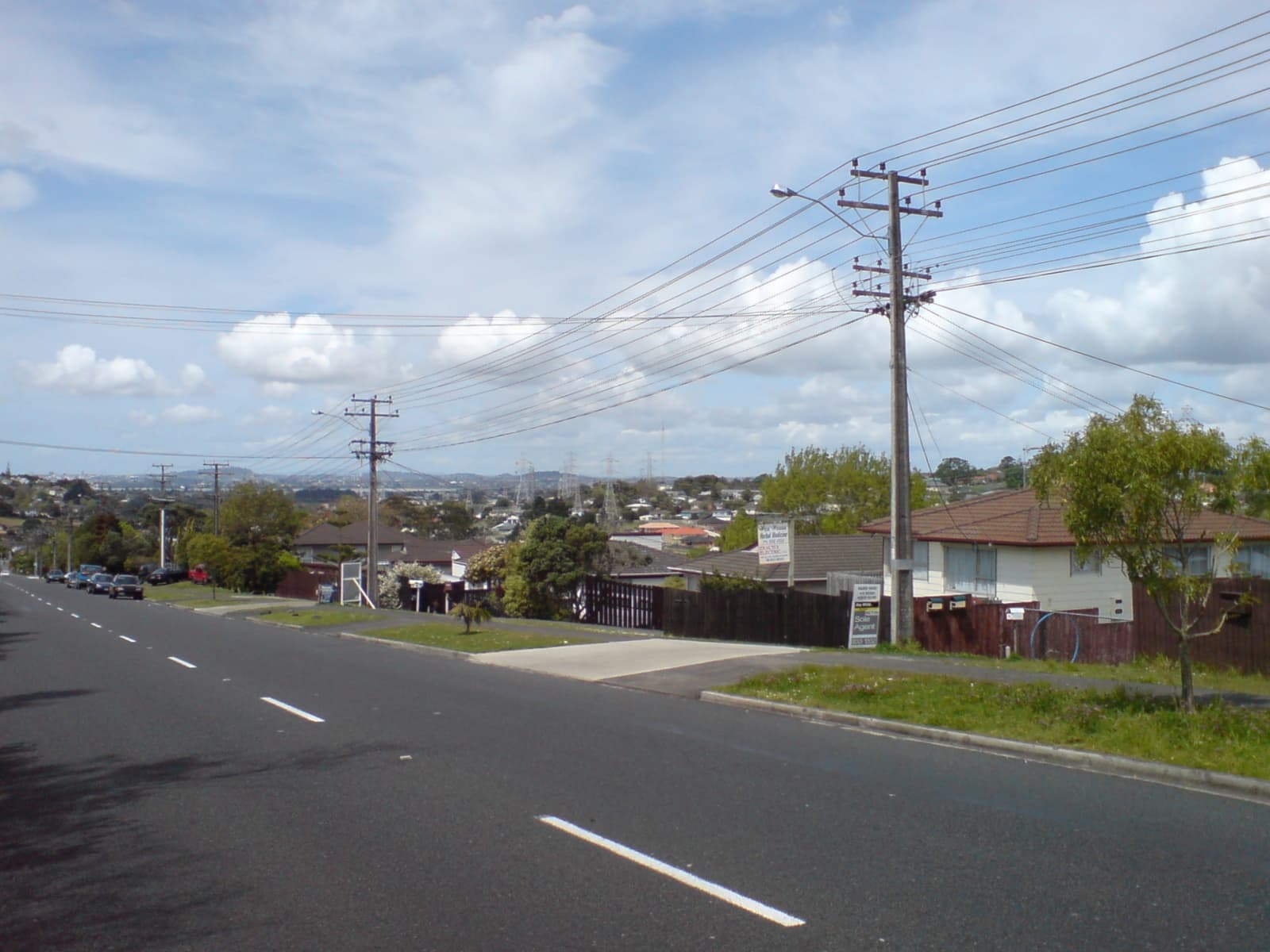
Photograph: Ingolfson. Licence: Public domain. Source on Wikimedia Commons. Also listed on our image credits page.
Adelaide’s older streets were planted as if electricity were a rumour. Plane trees, jacarandas, gums that were charming in a 1920s photograph and are now in conversation with three phases and a streetlight. The service mains — that last span from pole to eaves — thread through private canopy the network never chose. After a north-westerly the argument becomes a limb, a bang, and a dark kitchen.
This is a housing essay with a safety spine. It covers what is yours, what is SA Power Networks’, who to call, and why you never make yourself the person on the ladder. The storms hub keeps the weather pieces together. This one stays with the trees.
The argument since the 1920s
Walk Unley, Norwood, Prospect, the older pockets of Glenelg, the streets behind the parklands where the verge still has a tree that predates the bungalow. The overhead gear is the city’s ordinary way of delivering energy, and it shares air with the city’s ordinary way of making shade. The Hills are a different argument: taller trees, longer spans, and a bushfire conversation that is not theoretical.
A service line to a villa is often the most intimate piece of network a householder ever looks at. It arrives at a bracket under the eaves that painters have been gently ignoring for a decade. Trees on the nature strip lean toward it. A lemon in a side path eventually finds the aerial. None of this is a reason to become handy. It is a reason to know which desk owns which object before the storm.
Private trees versus network assets
SA Power Networks owns and operates the distribution network: the poles, the street conductors, the equipment on those poles, and the service that is theirs up to the point of supply. The exact boundary at a particular house is not something this journal will invent from a photograph. If you need the boundary, ask the network operator or a licensed electrician who can see the installation. What you can usefully hold is the principle. Network assets are not private timber. Private timber is not a network asset.
A tree on your land is your responsibility as a landholder in the ordinary way, and it becomes a network problem the moment it interferes with their equipment. That does not mean you prune around live mains. It means you stop, stay clear, and ask the people who are allowed to work near those mains. A street tree can still be in contact with a line that is not the council’s to de-energise.
Do not resolve an overlap with a pole saw because the appointment is weeks away. Vegetation near live overhead equipment is a specialist act. The people who do it have methods, clearances and, when required, an isolated line. You have a ladder and a theory. If the growth is only threatening a roof or a fence, and is nowhere near the aerials, that is ordinary tree work with an arborist who has looked up. Tell them about the service. If they are casual about it, hire a different arborist.
Service mains and the last span
The last span is where householders get bravest, because it looks domestic. It is a cable to your house, over your driveway, brushing your pittosporum. It is still not a clothesline.
A service that has been pulled, chafed, or left with a limb resting on it can sit for hours looking almost normal. From the ground, you will not reliably tell a healthy service from a wounded one. Stay away. Keep the driveway clear of people who want to “just lift it off”. Call SA Power Networks and describe the last span, the pole, the nearest cross-street. If the cable is down, if it is sparking, if it is on a vehicle, that is also 000 and the emergency electrician triage.
Painters, solar installers and roofers meet this span in ordinary weather. A careful contractor will say when they cannot work because the service is in the way. If a quote assumes someone will “just tie it back”, the quote is wrong.
Who to call
000 if there is fire, a person injured, a line on a vehicle with people inside, or a scene that is already a rescue. Say that it is electrical. Do not go back in to fetch a phone charger.
SA Power Networks for poles, street conductors, transformers, burning wires on their equipment, a service in trouble, a line down, a tree on their network. This is the faults and emergency path they publish for the public. Use it even if you feel you are bothering them. They would rather the call than the surprise.
A licensed electrician for the house side once the scene is safe: a bracket on your masonry, damage at the eaves, a board that took water when the gutter failed. Search the licence. Do not hire the first night-rate van as a substitute for the network operator.
Council for a street tree that is a street-tree problem — roots, a cracked footpath, a dead limb over the verge — once you are sure you are not asking them to prune a live conductor. If the tree and the line are in contact, the network conversation comes first.
An arborist for private canopy that is not near live mains, or for work they will only do after the network has made the air safe.
If you are unsure which desk applies, write to this desk in ordinary time with a photograph taken from far enough away. In a storm, default to distance, 000 if people are at risk, and SA Power Networks for anything that looks like their sky.
What you never do yourself
You never prune around the mains. You never rest a ladder on a service. You never push a limb off a line with a length of timber because timber was a tree once and you have decided that is insulating. You never assume an insulated coating is a handle. You never cut a cable to “make it safe”. You never use the stobie as a support for a clothesline or a basketball hoop.
You never work live, and you never treat a fallen line as dead because the street is dark. Darkness can mean the feeder is open. It can also mean the line is still fed from another point, or from a generator someone should not have connected.
You never send a teenager up with a saw because they are lighter. You never water-blast a meter box. You never drive over a line that is lying quiet on the verge.
Private trees and network assets share the air in these suburbs. The canopy can be yours. The mains are not. Nobody sensible settles that argument from a ladder.
After a limb comes down
Keep children and dogs in. Call. Wait. If the power has gone and the house is otherwise ordinary, treat the outage as a network event. If the house smells, if the board is wet, if the service has torn at the eaves, you are in the after the storm hour as well. Leave those circuits off.
When the network has cleared their equipment, you will still have a tree. That is now an arborist and, if the installation is hurt, a licensed electrician. Ask for a Certificate of Compliance if they do electrical work. Photograph from a distance if you need a record. Do not walk in for a closer shot.
Planting for the next owner
The unhurried part of this essay is the planting. If you are putting a tree in an overhead street, choose a species and a setback that will not recreate tonight’s job in 2040. Look up. Look at the service path to your own eaves. Jacarandas are a religion in some streets and a maintenance invoice in others. Gums on a small front yard under a three-phase run are a decision, not a default.
If you are shifting a driveway or adding a storey, do not relocate a service with a shrug. That is network and licensed work, and the conversation happens before the carpenter.
Adelaide will keep its overhead streets for a long time yet. Undergrounding happens in pieces. In the meantime the civic habit is dull and enough. Know what is yours. Know what is the network’s. Call 000 when people are in danger. Call SA Power Networks for their sky. Call a licensed person for the house. Never make yourself the third conductor in a tree that has been waiting a century to fall. The safety hub is the rest of the domestic picture, for the nights the weather is only half the story.
Questions readers send the desk
- Who looks after a tree that is touching the service line into my roof?
- If the line is the private service or a tree on your land, start by staying clear and asking a licensed electrician or the network operator which asset you are looking at. Do not prune around it yourself. SA Power Networks manages its own overhead network and the vegetation clearances it is responsible for.
- What should I do if a limb comes down on a line in a storm?
- Keep people and pets many metres back. Call 000 if anyone is at risk or if there is fire. Call SA Power Networks to report the network fault. Do not drag the limb, and do not assume a coating on the cable makes it safe.
- Can I plant a jacaranda under the street wires if I keep it trimmed?
- Plant for the tree it will become, not the sapling in the pot. Under overhead network, choose species and locations that will not argue with the lines in twenty years. Trimming around live mains is not a household hobby.