When to call an emergency electrician — and when to leave the house
A triage note for the night a hallway smells like hot plastic. 000, then SA Power Networks, then a licensed electrician — and sometimes the correct next step is the front door.
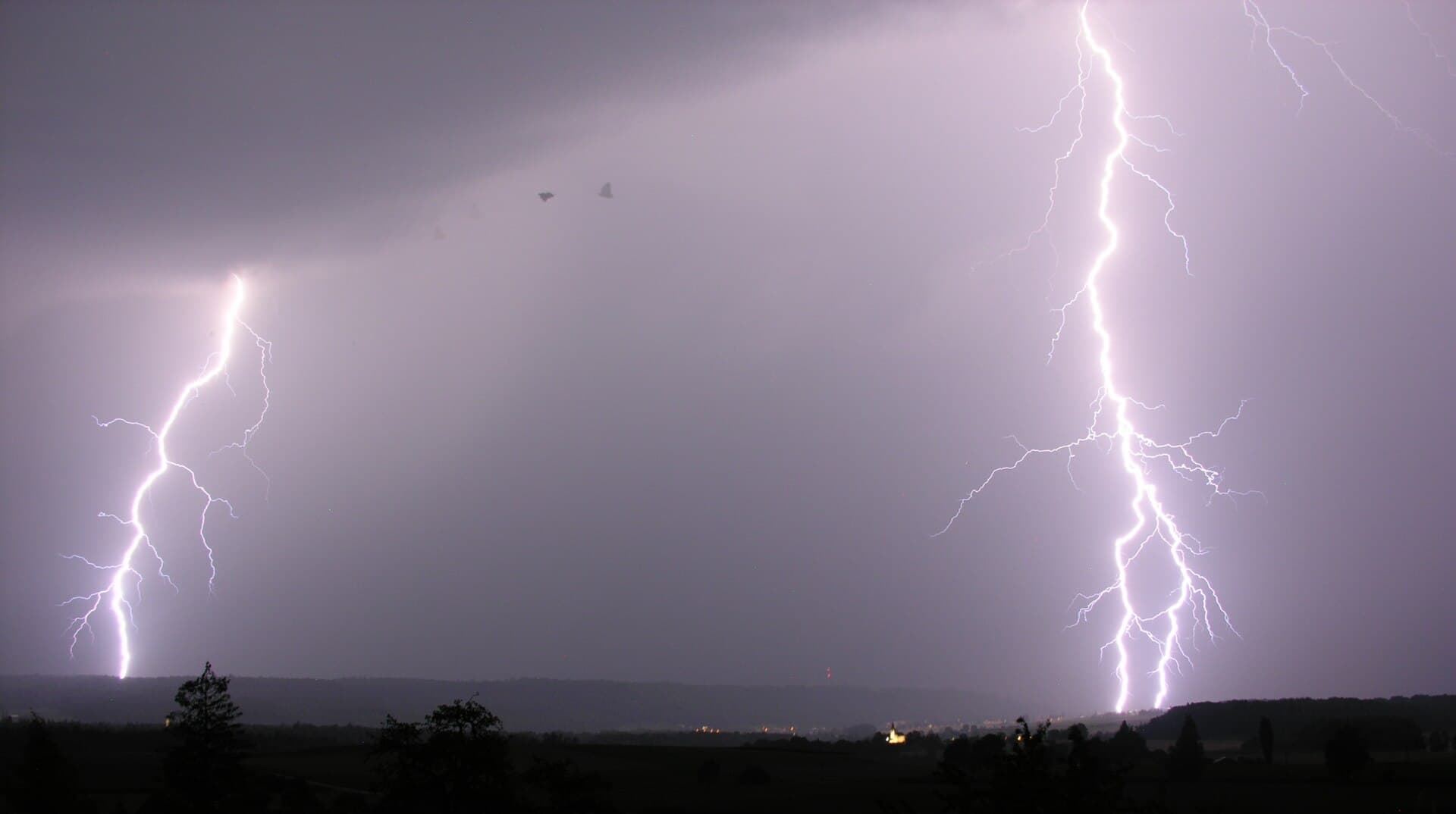
Photograph: Hansueli Krapf. Licence: CC BY-SA 3.0. Source on Wikimedia Commons. Also listed on our image credits page.
Some nights the question is not which electrician is cheapest at 11 p.m. The question is whether anyone should still be standing in the hallway. Adelaide’s storms, and the quieter faults that arrive on a still January evening, produce a lot of telephone advice that starts with “just check the board”. This is a triage note, not a slogan. It tells you when to leave, when to call 000, when the problem belongs to SA Power Networks, and when a licensed emergency electrician is the right person — after the house has been made a place a person can stand.
We will not tell you to work live. We will not tell you to open a switchboard with a steak knife. We will not tell you that a burning smell is “probably dust”.
Triage, not a slogan
Start with people, then the street, then the house. If someone has had a shock and is not themselves, if they have fallen, if they are not breathing as they should, that is 000 and ambulance. Do not become a hero by touching them while they are still the path to a live conductor. If you can turn the household main switch off without becoming part of the fault, do that. If you cannot, you cannot.
If there is flame, visible smoke, or a fire in a wall or roof, that is 000 and the fire service. Leave. Close doors behind you if you can. Do not go back for a laptop.
If the danger is a downed line, a burning wire on a pole, a smashed service, a car into a stobie — keep people away and call 000 if anyone is at risk, and SA Power Networks for the network equipment. The trees, service mains and overhead streets essay is the daylight version. At night the instruction is shorter. Metres of distance, not a polite step.
Only after those doors are closed does an emergency electrician enter the story. They are for the house side of a fault that is not currently trying to kill you: a wet board that is now merely worrying, a circuit that smells and has been turned off, a restoration that came back dirty. They are not for re-energising a street.
Leave the house
Leave if the smell of hot plastic or burning is getting stronger. Leave if you can hear arcing — that harsh, insect-like electrical sound — and you cannot put it in a box that is already off. Leave if a fitting is too hot to be near, if a wall is discoloured and growing, if smoke is coming from a cornice, if the switchboard is warm in a way that is new to you.
Leave if water and electricity are sharing a space you cannot separate: a flooded laundry, a burst heater and a wet floor under the board, a roof coming in over the meter. You will not improve that scene by standing in it.
Take people and pets. Take the phone. If it is night and the street is dark, take a torch you already own, not a hunting expedition back to a charging cupboard beside the board. Tell a neighbour if the problem might become theirs — a line, a fire, a smell in a shared wall.
Leaving is not theatrical. It is the correct next step when the information you have is “this is getting worse” and the information you do not have is “I can make it safe from here”.
Sometimes the correct next step is the front door. A hallway that smells like hot plastic is not a place to negotiate with a switchboard.
Call 000 first
000 is fire, ambulance and police. Electrical nights use the first two more than people expect. Fire for smoke, flame, a pole fire. Ambulance for shock, burns, a fall from a ladder that should never have been against a service.
Say where you are. Say what you can see. Say whether anyone is still inside. Do not diagnose the circuit for the operator. Do not stay on the property because you feel foolish. Foolish is a feeling. Carbonised timber is a fact. 000 does not send a licensed electrician. It sends the people who keep you alive long enough to need one later.
Call SA Power Networks
SA Power Networks owns the poles, the wires, the service that arrives at the house, and the network equipment that is not yours to open. A whole street dark, a transformer complaint, a line down, a service pulling away from the eaves, a meter enclosure that is damaged or arcing — those are network conversations. Their emergency and faults arrangements are published for this purpose. Use them.
You still call 000 first if the same scene is on fire or has injured someone. The network operator is not an ambulance.
Do not wait in the meter box. Do not open it. Do not replace anything. Do not cut a limb off a line. Do not assume that a line on a dry lawn is tired and harmless. The storms hub keeps this division in one place: life-threatening faults are 000, then the network; the household side is later.
A single dark house on a lit street may still be a service fuse or a connection at the point of supply. Report it. A licensed electrician who arrives and finds the problem is on the network will tell you the same thing, after you have paid for a night rate to be pointed at the pole.
Call an emergency electrician
Call one when the house is a place a person can stand and the problem is on your side of the installation. A residual current device that will not hold and you have already unplugged the wet outdoor tree. A board that took rain and is now dry enough to assess but not a mystery you will solve with a torch. Burning smell that has stopped getting worse since you turned a circuit off, and you want that circuit inspected before morning. Storm damage to fittings, a struck chimney, a verandah point that has torn out and is yours.
Search them in daylight if you can. A van and an after-hours rate are not a licence. Ask for the contractor name. Ask whether they will isolate, test and leave a Certificate of Compliance if they do work. You are not being fussy. You are being the customer the regime assumes.
Tell them what you have already done: main switch off or not, which rooms smell, whether the street is lit, whether water is involved, whether 000 or SA Power Networks have already been called. Do not meet them at an open live board.
If the problem can wait until ordinary hours without getting worse — a dead powerpoint in a spare room, a light that failed without drama — let it wait. Night rates exist because some work cannot wait. They should not exist because a householder was frightened into a Tuesday-morning job.
What can wait until morning
A planned outage that ended. A street that is dark and has been reported. A single lamp. A clock that is flashing. A wish to upgrade a board because the storm made you notice the ceramic fuses. Good. Book it. Do not book it as an emergency unless the board is the emergency.
Warning signs that have been true for months — a warm plate, a dimmer that buzzes — are still true at 2 a.m., and they are still not always a reason to drag someone out of bed if they are no worse than they were at dinner. If they are worse, they have moved categories.
After you have left
If you left because of fire, you do not re-enter because the sirens have gone and the house looks quiet from the footpath. You re-enter when the people who made it safe say so. If you left because of a smell and the house is now dark because you turned the main switch off, you can wait for a licensed person in the morning unless the smell is still travelling or smoke has appeared. If in doubt, stay out.
Tell the electrician, when they come, everything you told 000 and the network. Keep the notes. Storm nights blur. The after the storm piece is what you read when the feeder is back and you are tempted to turn the whole house on at once.
This desk is a journal. We will not be on the footpath with you. The order does not change because the prose is calm. People first. 000 for fire and ambulance. SA Power Networks for the pole and the service. A licensed electrician for the installation, once the house is a house again and not a scene. The front door is a legitimate piece of electrical safety equipment. Use it.
Questions readers send the desk
- When should I leave the house because of an electrical problem?
- If you smell burning plastic, see smoke or sparking you cannot explain, or feel heat from a board or a fitting, get people out. Call 000 if there is fire, smoke that is building, or anyone injured.
- Is a power outage itself a reason to call an emergency electrician?
- Not if the street is dark. That is SA Power Networks. Call an electrician for the house side once it is safe — a wet board, a smell, damage after a strike — not to restore a whole feeder.
- Can I open the switchboard to see what tripped?
- No. You may operate a household main switch or a labelled circuit device if you already know it and the cover stays closed. Do not open live internals and do not work live.