Downlights, insulation and ceiling fires
Halogen holes, roof bats and the wrong IC rating have started more Adelaide ceiling fires than most owners want to think about. LED is not a magic exemption. The fitting, the insulation and the transformer still have to agree.
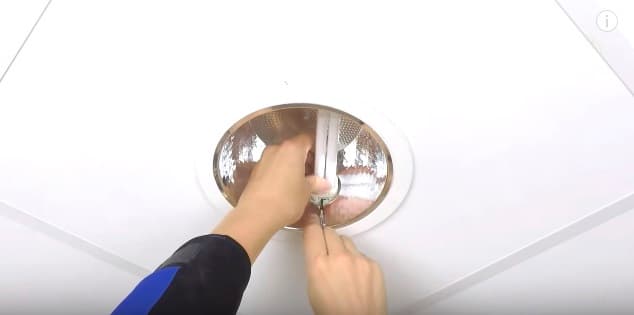
Photograph: Barbetrukitos. Licence: CC BY-SA 4.0. Source on Wikimedia Commons. Also listed on our image credits page.
Adelaide fell for downlights in a particular decade. The bungalows of Unley, Goodwood and Parkside had their plaster ceilings dotted like a plan of the night sky. The 1960s brick veneers of Campbelltown and Modbury followed, because a flush lamp looked like an upgrade on a batten holder. Norwood villas gained a few in the hall. Hills timber places gained a few in the raked ceiling over the living room, where the clearance to the sarking was already a guess. The lamps were often halogen. The transformers went into the roof. The bats went over the top in the next winter’s attempt to keep the heat out, or in.
A ceiling fire is an impolite way for that stack of decisions to end. Most make a brown circle, a smell, a call to a licensed electrician, and a conversation about ratings that should have happened when the holes were cut.
Heat, holes and the roof as an oven
A halogen downlight is a small heater that also produces light. Fifty watts into a compact can, in a roof space already hotter than the rooms below on an Adelaide February afternoon, is a thermal choice, not a decorative one. The can needs clearance. The cable needs to be the right type. The transformer — iron-core or electronic — needs somewhere to sit that is not a nest of cellulose. None of those needs are met by a fitting dropped through a hole and forgotten.
LED changed the marketing. It did not automatically change the holes. Owners swap lamps, or swap whole fittings into the old cut-outs, and assume the fire conversation has retired. A cooler source helps. It does not rewrite the rating of the luminaire, the position of the driver, or the fact that the roof bats have been creeping back toward the ring since the last tidy. The warning signs of an electrical fault include heat at a fitting and a smell of warm dust. In a ceiling those signs can sit above a closed hatch for a season.
Western-suburbs cavity brick does not change the roof physics. Thebarton and Mile End still have timber-framed ceilings that receive insulation when bills rise. Hills timber adds tighter triangles, more condensation, and sometimes sarking installed with bushfire in mind rather than downlight clearance. A raked ceiling in Stirling is a poor place to hide a transformer you cannot later reach.
IC, IC-4, and the marks that are not stickers
The useful question is not “is it LED?” The useful question is what the luminaire is rated to do when insulation is nearby. In the language used with AS/NZS 3000 and the luminaire standards, IC and IC-4 are not interior-design terms. They describe tested behaviour. An IC-4 fitting is one that can be abutted by and covered with building insulation. That is a specific claim about temperature and fire performance, made by the manufacturer about that fitting, not about the hole in your plaster.
Older classifications and older cans sit in thousands of Adelaide roofs without any such claim. Some were installed with a clearance that has since been filled. Some never had a clearance. Some have a plastic housing that was already tired when the halogen was still in it. Putting a new LED engine into that housing can reduce the watts and leave the rest of the hazard on the joist.
A licensed electrician who is asked to “just swap them to LED” should be allowed to say no, or to say yes with conditions: new fittings with a mark that matches the insulation plan, drivers that are not buried, holes that are the right size, and abandoned halogen transformers removed rather than left as warm relics. AS/NZS 3000 is the wiring rules, not a lighting catalogue, but it is the reason the installation still has to be safe as an installation. A pretty ceiling with an unmarked can in a duvet of bats is not a completed job.
Insulation is a good neighbour to a cable and a bad one to a lamp that was never rated to sit in a duvet.
The old halogen hole
The hole is a fact. It was cut for a particular can. The plaster around it may be heat-stained. The timber above it may be darker than the rest of the joist. Those marks are evidence. They are not a reason to keep using the point.
In an Unley bungalow the ceiling is often the original plaster, or a later plasterboard that was sheeted over it. Either way, a ring of extra holes from a 2004 renovation is now part of the house. A rewire that ignores them is how you get new TPS feeding old cans. The method for doing the wiring without gutting the rooms is in rewiring a 1950s Adelaide bungalow. The lighting half of that job is this: decide which points deserve a rated fitting, which should become a surface light again, and which should be closed.
Closing a hole is allowed. Not every room needs twelve downward lamps. If the roof space cannot give the clearance, fewer rated fittings beat a field of unmarked ones.
Norwood villas complicate the plaster. Decorative ceilings and cornices do not enjoy a second generation of cut-outs. Heritage villas and chasing cables is the neighbouring essay for masonry and ornament. The fire point is the same in a plainer house. The hole is not owed a lamp.
Roof bats, transformers, and the things that stay warm
South Australia has spent a generation telling households to insulate. The advice is sound. The collision is with fittings that were installed in the years when insulation was thinner, or absent, or pushed aside with a boot and a hope. Polyester and glasswool bats do not need to ignite to be a problem. They need to keep heat where a fitting cannot reject it. Timber, dust and old transformer windings do the rest.
Iron-core halogen transformers are heavy, warm, and still up there. Electronic ones are smaller and still fail. Both were often left on the back of a joist, or on the plaster, or against a rafter in a Hills roof that moves. A later LED downlight with an integral driver can be better, if the whole luminaire is rated for the insulation that will sit on it. A later LED downlight with a remote driver tossed into the bats is a new version of the old mistake.
Older TPS that has sat against a halogen can is a brittle sheath in a hot roof, not a theoretical ageing study. Residual current protection — RCD or RCBO — on the lighting circuit is not a fire sprinkler. It may open on some earth-faults. It will not cool a can. The MEN arrangement at the board is essential and beside this particular point. The fire starts in the ceiling. The board is still where the circuit should be isolated, which is why the switchboards and wiring hub sits next to this piece.
Do not work live to “just check” a fitting. Do not remove a downlight with the circuit on because the wall switch is off. Isolating at the board is the job of a licensed electrician when the circuit is a tangle. This desk will not give you a sequence for doing it yourself on a live can.
What a careful replacement looks like
A careful job begins with the insulation plan, not the catalogue. If the roof is to be covered, the fittings must be rated to be covered, or the insulation must be kept off them by a barrier that will still be there after the next top-up. If the roof is a tight Hills triangle, some points should be abandoned. If the house is a 1960s brick veneer with a generous void, that is not a licence to install unmarked bargains in a grid of thirty.
The licensed electrician should isolate, remove what is being retired — lamps, cans, transformers — and install fittings whose marks match the brief. Drivers stay accessible. Cables are clipped and not draped. Holes that will not take a new fitting are closed. The lighting circuit lands on a board that can isolate it, preferably as an RCBO way with a label a stranger could follow. If the work is prescribed, you should see a Certificate of Compliance. A bag of LEDs from a hardware aisle and a Saturday in the manhole is not a certificate.
The Adelaide houses hub puts this back in climate: the plains bake the roof, the gulf end salts the metalwork, the Hills add moisture. Downlights are not forbidden in any of those places. Unrated downlights under a new blanket of bats are how a safety essay earns its title. If a fitting is brown, if the plaster is stained, if the roof smells like hot dust, treat it as a fault. LED is a technology. It is not an amnesty.
Questions readers send the desk
- Does switching to LED make old halogen holes safe?
- Not by itself. The hole, the clearance, the insulation and the rating of the new fitting still have to match. A cool lamp in a fitting that was never meant to sit in a duvet is only half an answer. A licensed electrician can tell you whether the points can stay, be resized, or should be retired.
- What does IC-4 actually mean?
- In the current marking language it means the luminaire can be abutted by and covered with thermal insulation. IC is a related, older conversation about insulation contact. Neither mark is a sticker you apply after the fact. It is a property of the tested fitting, used as AS/NZS 3000 and the luminaire standards expect.
- Can I just push the roof bats away from the lights?
- Pushing bats by hand in a hot roof is how people invent a clearance that lasts until the next wind or the next top-up of insulation. If the fitting is not rated to be covered, the insulation has to be kept off it by a method that stays put. That is installation work, not a Saturday tidy.